 English
 हिंदी
हिंदी
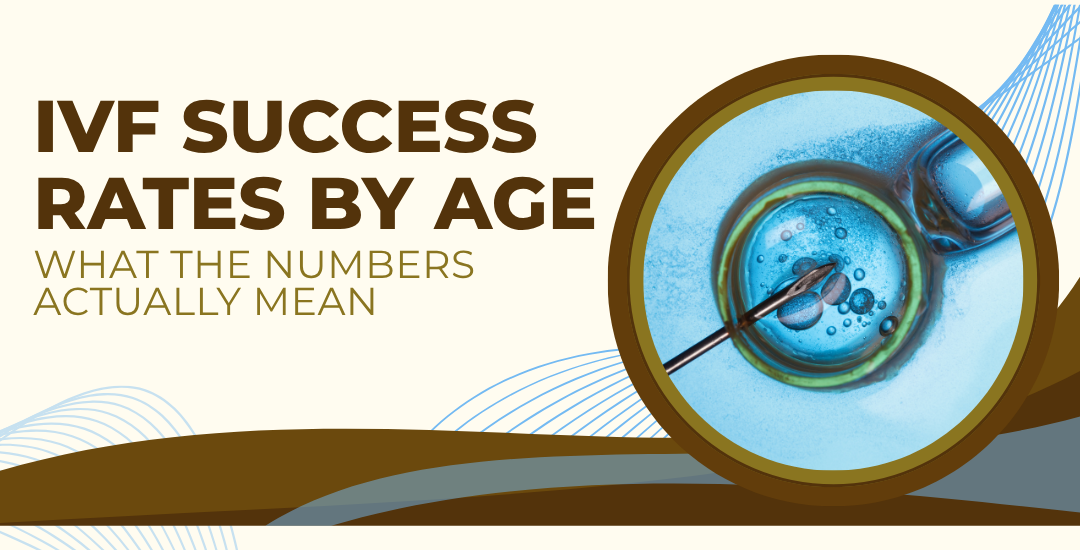
IVF success rates are among the first things couples research when considering fertility treatment. The numbers are widely published, frequently quoted, and often misunderstood. A headline claiming ‘60% success rate’ means very little without knowing what age group it applies to, how ‘success’ is being defined, and whether it refers to a single cycle or cumulative attempts.
This article breaks down how age affects IVF outcomes, what the published data actually shows, and how to interpret success rates when making decisions about your own treatment.
Why Age Is the Single Strongest Predictor of IVF Success
In reproductive medicine, maternal age is the most significant variable affecting IVF outcomes. This is not about overall health or fitness. It is about ovarian reserve and egg quality, both of which decline with age on a predictable biological timeline.
Women are born with their entire supply of eggs, approximately 1 to 2 million at birth. By puberty, this drops to around 300,000 to 400,000. By age 37, the average woman has roughly 25,000 remaining. The decline accelerates after 35 and becomes steep after 40.
But quantity is only part of the picture. Egg quality also deteriorates with age. Older eggs have higher rates of chromosomal abnormalities (aneuploidy), which directly affect embryo viability, implantation, and miscarriage risk. At age 25, approximately 25% of eggs are chromosomally abnormal. By 40, that figure rises to over 60%. By 43, it exceeds 80%.
This biological reality applies regardless of how healthy the patient is, how regular her cycles are, or whether she conceived naturally before. IVF can bypass many causes of infertility, but it cannot reverse the age-related decline in egg quality.
IVF Success Rates by Age Group: Published Data
The following figures are based on national registry data and published literature. They represent live birth rates per embryo transfer cycle, which is the most clinically meaningful metric.
Age Group | Live Birth Rate per Transfer | Miscarriage Rate | Chromosomal Abnormality in Eggs |
Under 35 | 40-50% | 10-15% | ~25% |
35-37 | 30-40% | 15-20% | ~35% |
38-40 | 20-30% | 20-30% | ~50% |
41-42 | 10-15% | 30-40% | ~65% |
43+ | 3-5% | 40-50% | >80% |
Source: Data ranges based on SART/CDC national registry figures and published reproductive medicine literature. Individual clinic outcomes may vary.
These numbers represent averages across large populations. Individual outcomes depend on additional factors including the cause of infertility, ovarian reserve markers (AMH, antral follicle count), male factor parameters, embryo quality, uterine environment, and the clinic’s laboratory standards.
How to Interpret IVF Success Rates Correctly
Per-Cycle vs Cumulative Success
A single IVF cycle may show a 35% live birth rate for a woman aged 34. That means a 65% chance of not achieving a live birth in that specific cycle. However, cumulative success rates across 3 fresh cycles reach 60 to 70% for the same age group. This distinction is clinically important. A single failed cycle does not define the overall prognosis.
Live Birth Rate vs Clinical Pregnancy Rate
Some clinics report ‘clinical pregnancy rate’ (positive heartbeat on ultrasound at 6-7 weeks) rather than ‘live birth rate’ (delivery of a viable infant). Clinical pregnancy rates are always higher because they do not account for miscarriages that occur after the first ultrasound. When comparing clinics or evaluating outcomes, always ask for the live birth rate per transfer. It is the only metric that reflects the outcome that matters.
Fresh vs Frozen Transfer Rates
Modern IVF increasingly uses frozen embryo transfer (FET) protocols, where all embryos are frozen after retrieval and transferred in a subsequent cycle. FET success rates are now comparable to or slightly higher than fresh transfer rates in many age groups, largely because the uterine lining can be optimised independently of the stimulation cycle. When reviewing clinic data, check whether the reported rates include fresh, frozen, or both.
Donor Egg Outcomes
For women over 40 with diminished ovarian reserve, donor egg IVF offers significantly higher success rates because the egg quality is determined by the donor’s age, not the recipient’s. Live birth rates with donor eggs typically range from 50 to 65% per transfer regardless of the recipient’s age. This is an important option to discuss when the patient’s own egg quality is the primary limiting factor.
Want to understand your individual chances with IVF? Dr. Pratibha Mittal provides personalised fertility assessments based on your clinical profile.
Factors Beyond Age That Affect IVF Outcomes
Age is the dominant variable, but not the only one. The following factors have demonstrated clinical impact on IVF success rates.
Ovarian Reserve (AMH and AFC)
Anti-Mullerian Hormone (AMH) levels and antral follicle count (AFC) measured on ultrasound indicate the remaining egg supply. Low AMH or low AFC at any age reduces the number of eggs retrieved per cycle, which directly affects the number of viable embryos available for transfer. However, AMH reflects quantity, not quality. A woman aged 32 with low AMH may still produce chromosomally normal eggs.
Male Factor
Sperm quality accounts for approximately 40 to 50% of infertility cases. Severe oligospermia or high DNA fragmentation can reduce fertilisation rates even with ICSI. A complete semen analysis and, in selected cases, sperm DNA fragmentation testing should be part of every IVF workup.
Uterine Factors
Submucosal fibroids, uterine polyps, intrauterine adhesions (Asherman’s syndrome), and thin endometrium can impair implantation even with chromosomally normal embryos. Hysteroscopy is used to diagnose and treat these conditions before embryo transfer. Our centre was the first in Firozabad to introduce both diagnostic and operative hysteroscopy.
Body Weight and Metabolic Health
BMI above 30 is associated with reduced ovarian response to stimulation, lower egg quality, and lower implantation rates. PCOS, insulin resistance, and thyroid dysfunction all affect IVF outcomes and should be optimised before starting a cycle. Weight loss of even 5 to 10% in overweight patients has been shown to improve IVF success rates.
Laboratory and Clinic Factors
IVF outcomes are heavily influenced by laboratory quality: the culture media used, incubator conditions, embryologist experience, and quality control protocols. Success rates vary between clinics even for the same patient profile. When choosing a centre, ask about their lab accreditation, embryologist qualifications, and reported outcomes stratified by age.
What This Means for Your Treatment Decision
The data is clear: starting IVF earlier gives better results. For women under 35 with a diagnosed fertility problem, IVF offers the highest per-cycle success rates of any assisted reproductive technique. For women 35 to 40, outcomes are still favourable but decline with each year of delay. After 40, success rates drop significantly and the conversation shifts to whether own-egg IVF is viable or whether donor eggs should be considered.
That said, age-based statistics describe populations, not individuals. A 38-year-old with good ovarian reserve, a normal uterine cavity, and a mild male factor may have outcomes closer to the under-35 group. A 32-year-old with severe endometriosis and low AMH may face more challenges than average for her age. The role of a fertility specialist is to assess your specific clinical picture and give you a realistic, individualised prognosis.
If you are looking for the best IVF doctor in Firozabad to discuss your situation, Dr. Pratibha Mittal provides detailed fertility assessments including AMH testing, antral follicle count, hysteroscopy where indicated, and a clear treatment plan based on your individual profile. Contact: +91-9971356403.
Practical Steps Before Starting IVF
Optimising modifiable factors before beginning an IVF cycle improves outcomes at any age.
Get baseline investigations done early
AMH, AFC, thyroid function, fasting insulin, prolactin, and a complete semen analysis for the male partner. These should be completed before the first consultation to allow for efficient treatment planning.
Address metabolic issues
If BMI is above 30, weight reduction before starting IVF is clinically recommended. Uncontrolled diabetes, thyroid dysfunction, and vitamin D deficiency should all be corrected.
Stop delaying
Every 6 to 12 months of delay after age 35 measurably reduces IVF success rates. If you have been trying to conceive for over 12 months (or 6 months if over 35), seek specialist evaluation without further delay.
Choose your clinic carefully
Ask about age-specific success rates, lab accreditation, embryologist experience, and whether they offer blastocyst culture and vitrification. Not all IVF centres are equal.
Ready to take the first step? Mittal Nursing Home & IVF Centre, 2 Mathura Nagar, Bypass Road, Firozabad Phone: +91-9971356403 | Available 24 hours
FAQs
What is a good IVF success rate for my age?
For women under 35, live birth rates of 40 to 50% per transfer are considered standard at well-equipped centres. For ages 35 to 37, 30 to 40% is expected. Between 38 and 40, 20 to 30%. Above 40, rates drop to 10 to 15%, and above 43, below 5% with own eggs. Cumulative rates across multiple cycles are substantially higher than per-cycle rates.
Does AMH level predict IVF success?
AMH predicts how many eggs can be retrieved in a cycle (ovarian response), not egg quality. Low AMH means fewer eggs per cycle, which reduces the probability of producing a viable embryo. However, a woman with low AMH but good egg quality can still achieve success. AMH is one factor in the assessment, not the sole determinant.
Is IVF worth trying after age 40?
Own-egg IVF after 40 can still succeed, but success rates are significantly lower and miscarriage rates are higher due to increased chromosomal abnormalities in eggs. After 42 to 43, most fertility specialists recommend discussing donor egg IVF, which maintains high success rates regardless of the recipient’s age. The decision depends on the patient’s ovarian reserve, treatment history, and personal preferences.
How many IVF cycles should I try before considering other options?
Most fertility specialists recommend reassessing the treatment plan after 3 failed fresh IVF cycles. If no viable embryos are being produced, the issue is likely egg quality, and continuing with the same protocol is unlikely to change outcomes. At that point, options include protocol modification, donor eggs, or further investigation into implantation failure if embryos are of good quality but not implanting.
Does lifestyle affect IVF success rates?
Yes. Smoking reduces IVF success rates by 30 to 40% and should be stopped at least 3 months before treatment. Alcohol consumption above moderate levels impairs egg and sperm quality. BMI above 30 reduces ovarian response and implantation rates. Adequate sleep, stress management, and correction of nutritional deficiencies (particularly vitamin D and folic acid) are all supported by evidence as beneficial before IVF.
MEDICALLY REVIEWED BY
Dr. Pratibha Mittal Gynecologist, Obstetrician & IVF Specialist. Mittal Nursing Home & IVF Centre, Firozabad. Qualifications: MBBS and MS (OBG) from Maulana Azad Medical College, MRCOG Part I (UK), Fellowship in Reproductive Medicine (IFS, Fortis Hospital). Specialises in IVF, ICSI, recurrent pregnancy loss, high-risk pregnancy, and gynaecological laparoscopy.