
 English
 हिंदी
हिंदी
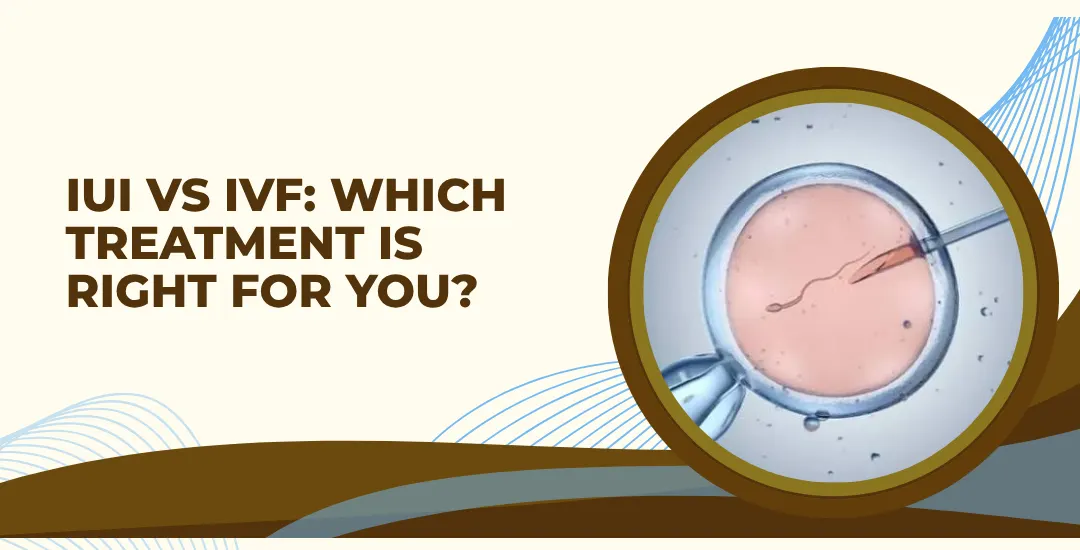
IUI and IVF are both fertility treatments, but they are suited to different situations. IUI places prepared sperm directly into the uterus around the time of ovulation, leaving fertilisation to occur naturally inside the body. IVF fertilises the egg outside the body in a laboratory and transfers the resulting embryo into the uterus. The choice between the two depends on the specific cause of infertility, age, and how much intervention the situation calls for, not on which treatment is generally considered “stronger.”
This article outlines how the two procedures differ, which candidates are better suited to each, and how the decision is typically made.
According to Dr. Pratibha Mittal, IVF doctor in Firozabad, “Patients often ask to start with IVF directly, assuming it offers a better chance regardless of circumstance. That is not always accurate. IUI is the appropriate first step for a number of cases, and moving to IVF too early can mean unnecessary cost and intervention where a simpler treatment would have worked.”
How the procedures differ?
IUI involves minimal ovarian stimulation or a natural cycle, monitoring of ovulation, and placement of washed and concentrated sperm into the uterus using a thin catheter. Fertilisation takes place inside the fallopian tube, as in a natural conception.
How IVF differs?
IVF involves higher-dose ovarian stimulation to produce multiple eggs, retrieval of those eggs under sedation, fertilisation in a laboratory, culturing of the resulting embryos, and transfer of a selected embryo into the uterus. IUI is a shorter, less invasive procedure completed in a single cycle without anaesthesia, while IVF is a multi-step process spanning roughly two to three weeks per cycle. Where sperm quality is a significant factor, ICSI may be used alongside IVF to inject a single sperm directly into each egg.
When Is IUI the Better Option?
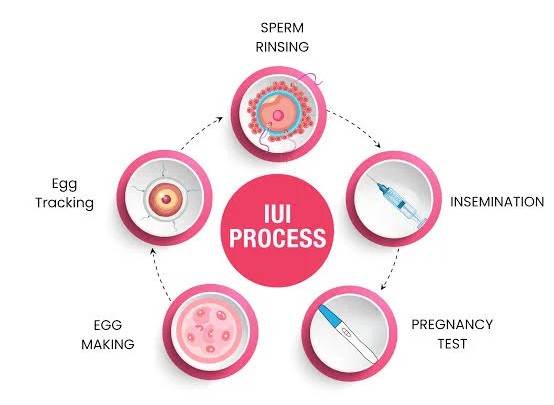
IUI is generally recommended for cases where the reproductive system is largely functional and the obstacle to conception is comparatively minor. Typical candidates include:
- Mild male-factor infertility. Sperm count or motility is slightly below normal range but not severely affected.
- Unexplained infertility. Couples under 35 who have not conceived despite regular attempts, with no clear diagnosis on either side.
- Ovulatory disorders. Conditions such as PCOS, where ovulation can be induced or supported with medication.
- Cervical factor infertility. Cervical mucus interferes with sperm reaching the uterus naturally.
- Use of donor sperm. IUI is a straightforward method of insemination in these cases.
IUI is generally not recommended where the fallopian tubes are blocked, where male-factor infertility is severe, or where the female partner is over 38 with reduced ovarian reserve, since success rates decline sharply in these situations.
When Is IVF the Better Option?

IVF is generally recommended where the barrier to conception is more significant or where IUI has already been attempted without success. Typical candidates include:
- Blocked or damaged fallopian tubes. These prevent natural fertilisation and make IUI ineffective regardless of other factors.
- Severe male-factor infertility. Sperm count, motility, or morphology is significantly reduced, usually addressed through ICSI.
- Diminished ovarian reserve or advanced maternal age. Particularly past 38, where time-sensitive intervention improves outcomes.
- Moderate to severe endometriosis. This can affect egg quality and implantation.
- Failed IUI cycles. Typically after three attempts without success.
- Genetic conditions. These require embryo screening prior to transfer.
Two or three cycles without success is a reasonable point to reconsider the approach.
Success Rates and Cost: IUI vs IVF
Success rates and cost differ substantially between the two treatments, and both factor into the decision.
- IUI success rates. Typically range from 10% to 20% per cycle, depending on age, cause of infertility, and whether medication is used to support ovulation. Because IUI is less invasive, it is often attempted for two to three cycles before considering IVF.
- IVF success rates. Generally higher per cycle, particularly for women under 35, though the exact rate depends on age, embryo quality, and the underlying diagnosis. Further detail is available in IVF success rates by age.
Cost follows a similar pattern. IUI is considerably less expensive per cycle than IVF, since it does not involve laboratory fertilisation, embryo culture, or the medication load associated with full ovarian stimulation. A detailed cost breakdown for this region is available in IVF cost in Firozabad. Because of this cost and invasiveness difference, IUI is frequently attempted first where clinically appropriate, with IVF reserved for cases where IUI is unlikely to succeed or has already failed.
How the Decision Is Made
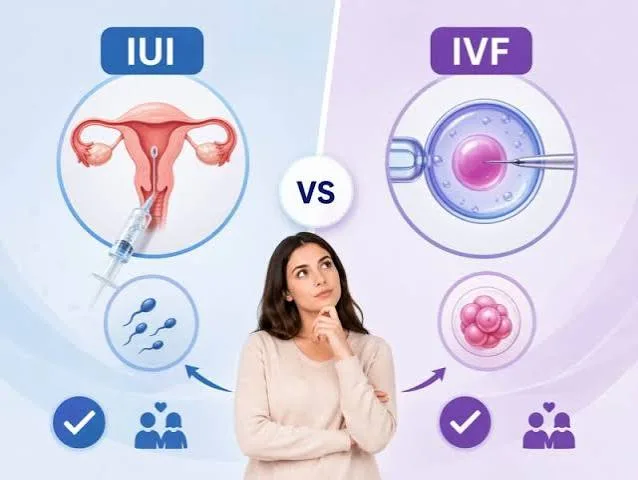
The choice between IUI and IVF is based on a complete diagnostic evaluation rather than patient preference alone. This typically includes:
- Ovarian reserve assessment. Measured through AMH and antral follicle count.
- Tubal patency check. A hysterosalpingogram or similar test to confirm whether the fallopian tubes are open.
- Semen analysis. Evaluates sperm count, motility, and morphology.
- Age and duration review. How long conception has been attempted factors directly into the recommendation.
- Underlying condition check. Conditions such as PCOS or endometriosis are factored into the plan.
A treatment recommended without this evaluation is not built on the specific case.
Why Choose Dr. Pratibha Mittal for IUI and IVF?
Selecting between IUI and IVF is more reliable when based on a complete diagnostic picture rather than a general preference for one treatment over the other. The care here is built around that principle:
- Specialist qualification. Dr. Pratibha Mittal holds an MS in Obstetrics and Gynaecology from Maulana Azad Medical College and a Fellowship in Reproductive Medicine, with experience managing both IUI and IVF cases.
- Complete diagnostic evaluation. Ovarian reserve, tubal patency, and semen parameters are assessed before a treatment is recommended.
- Stepwise escalation where appropriate. IUI is offered first in cases where it is clinically suitable, avoiding unnecessary cost or intervention.
- Direct communication of prognosis. Patients receive a clear explanation of expected success rates for their specific case before deciding on a treatment path.
Ready to find out which treatment fits your case?
FAQs
Is IVF more likely to succeed than IUI?
How many IUI cycles are typically tried before moving to IVF?
Is IUI painful?
Can IUI be used with donor sperm?
Does age affect the choice between IUI and IVF?
How can I book a consultation with Dr. Pratibha Mittal?
Call +91-9971356403 or +91-9990848807, or fill in the contact form on the website, and the team will arrange your appointment.