 English
 हिंदी
हिंदी
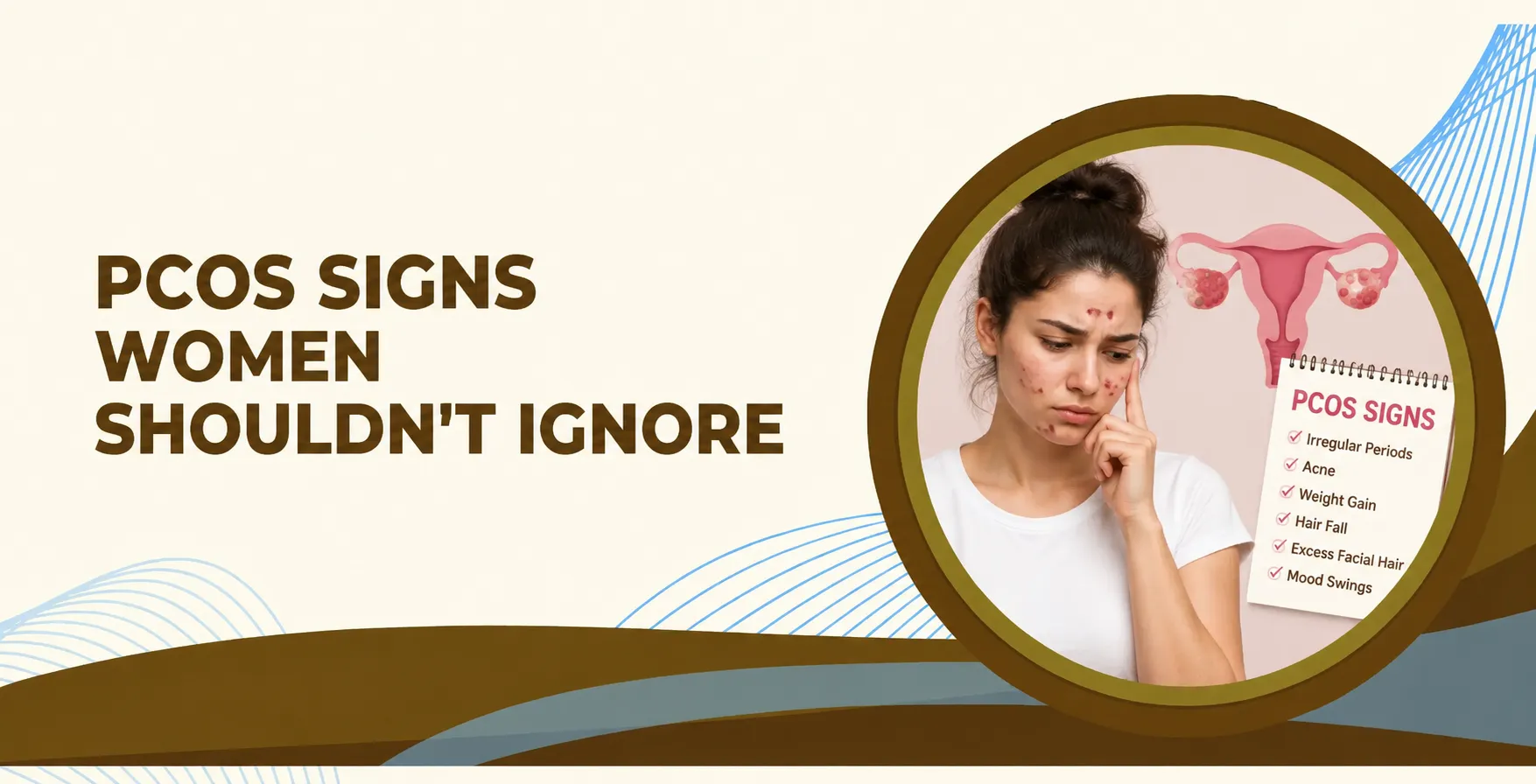
Most women attribute all of these to bad luck and stress: a missed period, a stubborn breakout, or hair loss. However, your body will not lie! Polycystic Ovary Syndrome (PCOS) occurs in almost 1 in every 5 women in India, with many of these women not diagnosed for several years. Recognizing the signs early and seeking PCOS treatment can make a significant difference to your hormonal health, fertility, and overall wellbeing.
Dr. Pratibha Mittal says that PCOS is often regarded as a cosmetic or lifestyle problem. It isn’t. Without treatment, it can impact fertility, metabolic health, and long-term diabetes and heart disease risk. That’s why it’s so important to have it evaluated early.
Don’t Ignore the Signs of PCOS: Book Your Appointment

10 Early Signs You Should Not Ignore
1. Irregular or Missed Periods
The first sign you have is if your cycle is irregular, sometimes 45 days, sometimes none at all.
- Less than 8 periods per year is significant medically
- Heavy or light bleeding is also considered very heavy or very light bleeding.
- Disrupted ovulation from hormonal imbalance is the root cause
Note: Begin by putting the cycle on an app for women’s periods. If it is regularly irregular for more than 3 months, make your appointment.
2. Persistent Acne Beyond Your Teenage Years
The problem is that adult acne – particularly deep, painful cysts around the jawline and chin – isn’t necessarily a skin care issue.
- If there is too much of the androgens, there is an overproduction of oil (sebum) in the skin.
- These pimples just won’t go away with good skincare.
- If the doctor you usually go to isn’t able to manage it, hormones might be the answer.
3. Unwanted Facial or Body Hair (Hirsutism)
Hair on the face, back, chest, stomach, and/or chin is another symptom of PCOS.
- Approximately 70% of women with PCOS will experience this.
- It isn’t a fault of his or her own, but it is a result of high levels of the male hormones in his or her body.
- It can have a profound effect on confidence and should be treated properly.
4. Thinning Hair or Scalp Hair Loss
PCOS can lead to the opposite issue on the head—thinning hair, a widening hair part, or even a receding hairline.
- Androgenetic alopecia, or female-pattern hair loss, is the term used for this.
- The same hormones that lead to facial hair also lead to a reduction in scalp hair follicles.
- Likely to get worse if not treated.
5. Unexplained Weight Gain (Especially Around the Belly)
Even on a diet and exercise plan, struggling to lose weight? Insulin resistance is a frequent symptom of PCOS.
- When insulin is not well controlled, excess fat is stored in the abdomen.
- Ovary production of more androgens is stimulated by high insulin.
- This forms a vicious circle that is not conducive to the learning process.
6. Dark, Velvety Skin Patches (Acanthosis Nigricans)
Noticed dark patches near your neck, armpits, or inner thighs? This isn’t dirt; it’s a metabolic signal.
- Called acanthosis nigricans, this is a sign of significant insulin resistance
- Excess insulin triggers rapid skin cell turnover with more melanin
- Commonly mistaken for pigmentation or a tan line
7. Chronic Fatigue and Low Energy
If you feel tired even after a good night’s rest, it’s not a case of burnout.
- Hormone changes and abnormal glucose regulation deplete your energy levels.
- Women suffering from PCOS are also affected by sleep apnea, a condition in which breathing stops during sleep.
- If there is persistent and unexplained fatigue and other signs are present, investigate.
8. Mood Swings, Anxiety, or Low Mood
The emotional burden of PCOS is very real, and sometimes underestimated.
- Hormones have direct impacts on neurotransmitters associated with mood.
- Women with PCOS are more likely to suffer from anxiety and depression.
- These are not “just feelings” – they are clinical symptoms that should be discussed with a doctor.
9. Difficulty Getting Pregnant
Many women are not diagnosed with PCOS until they begin to attempt becoming pregnant.
- Irregular ovulation results in a lower chance for an egg to be fertilized every cycle.
- PCOS is among the top reasons for female infertility in India.
- The sooner it’s identified, the more fertility options are still available!
- Ovarian reserve is another related, but different question that should be understood – read Low AMH: Can You Still Get Pregnant Naturally or With IVF? To learn more about how egg reserve impacts the process of conception.
- If the couple has both male and female problems, where the egg doesn’t get fertilized, the ICSI treatment can help in enhancing the chances of fertilization by directly introducing a single sperm into the egg.
Concerned About PCOS Symptoms? Book an Appointment Today
10. Elevated Blood Sugar or Pre-Diabetes Flags
Don’t dismiss any elevated blood glucose or insulin level, even if it is a routine test.
- As many as one in two women with PCOS gets type 2 diabetes by the time they are 40 years old.
- Insulin resistance is one of the causes and is a result of PCOS.
- It is possible to reverse pre-diabetic patterns by early intervention by a specialist.
Why Early Diagnosis in Firozabad Matters
For advanced and evidence-based women’s healthcare, the women of Firozabad no longer need to travel to larger cities. A specialist clinic that provides all Gynecology Treatment Firozabad brings together a personalized treatment plan, hormonal profiling, and pelvic ultrasound all in one place.
Laparoscopic Gynaecological Surgery has come a long way for women dealing with related reproductive issues, and there are fewer invasive treatments for ovarian cysts, fibroids, and other structural issues that can occur with or be mistaken for symptoms of PCOS. Having a doctor’s expertise in your local area means quick diagnosis, hassle-free follow-up, and a better result without travel.
PCOS isn’t the only factor that affects your fertility timeline ovarian reserve matters too
What to Expect at Your First Appointment
| Step | What Happens |
| Medical history review | Menstrual patterns, symptoms, family history |
| Blood tests | Hormones, insulin, thyroid, blood sugar |
| Pelvic ultrasound | Ovarian structure and follicle count |
| Diagnosis | Based on Rotterdam Criteria |
| Treatment plan | Lifestyle, medication, and fertility options |
Frequently Asked Questions
1. What are the beginning signs of PCOS?
Symptoms generally start with irregular periods or missed periods, continued acne along the jawline, and weight gain. Other symptoms that some women experience symptoms before they’re formally diagnosed, including excess facial hair or fatigue.
2. How do you know if you should get checked for PCOS?
If you have two or more of the symptoms above-irregular periods, adult acne, excess hair growth, weight gain, or inability to conceive—it’s important to see a specialist to evaluate. It’s not necessary to experience all the symptoms to get a review.
3. At what age does PCOS start?
PCOS usually starts in the teen years or early 20s, typically around the time of the first period. However, many women were only identified in their late 20s or early 30s as the result of a medical investigation due to difficulties with conception.
4. What is the biggest indicator of PCOS?
The most significant indicator is irregular periods (fewer than 8 periods per year or periods longer than 35 days). If used with other symptoms of high androgens (such as excess hair or acne), it is highly indicative of PCOS.
5. Can PCOS be cured if caught early?
There is no permanent cure for PCOS, but this condition is much easier to manage when diagnosed early. Most women can successfully manage their symptoms and substantially reduce the risks of long-term complications, with a combination of lifestyle changes and medical treatment.
6. What foods should I avoid with PCOS?
Sugar, carbonated beverages, junk food, and trans fat are the ones to be avoided as they increase insulin levels and exacerbate hormonal imbalance. Eating a diet high in whole grains, leafy vegetables, lean proteins, and anti-inflammatory foods promotes better hormonal balance.