
 English
 हिंदी
हिंदी
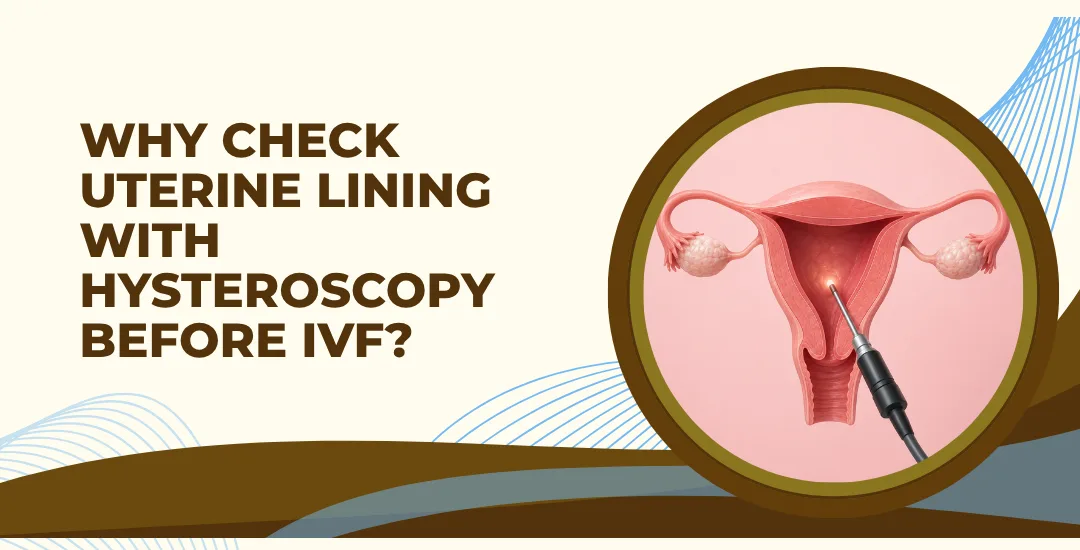
Checking the uterine lining before IVF often comes down to one simple reason. Ultrasounds don’t always tell the full story. Hysteroscopy before IVF gives a direct, magnified view inside the uterus, catching polyps, adhesions, or a thin septum that a routine scan can miss entirely. It’s a short procedure with a long term payoff, since an embryo transferred into a cavity with hidden problems rarely gets a fair chance. Understanding the benefits of hysteroscopy before IVF starts with knowing exactly what it can reveal.
According to Dr. Pratibha Mittal, IVF Doctor in Firozabad, “I’ve seen embryos of excellent quality fail to implant simply because no one ever checked inside the uterus. Hysteroscopy before IVF isn’t an extra step. It’s how we confirm the cavity is actually ready to receive a pregnancy. A short look inside can save a couple’s next cycle from repeating the same unexplained failure.”
What Can Hysteroscopy Actually Find Before IVF?
A standard ultrasound gives an outline. Hysteroscopy gives the full picture.
Uterine Polyps: Small growths on the lining can sit unnoticed for years. They quietly interfere with implantation even when every other test looks normal.
Intrauterine Adhesions: Scar tissue from past surgeries or infections can partially block the cavity. Ultrasound frequently misses this completely.
Septum or Shape Abnormalities: A septum dividing part of the uterus can reduce blood supply to an embryo. It’s often invisible on a standard scan.
Chronic Endometritis: Low grade inflammation in the lining can quietly reduce receptivity. It rarely shows up unless someone actually looks.
Every one of these findings can usually be corrected in the same sitting through Hysteroscopy Treatment, often without needing a second procedure.
Why Do Doctors Recommend It Before an IVF Cycle?
It isn’t recommended for everyone, but for the right cases it changes outcomes.
After Failed Transfers: When good embryos repeatedly fail to implant, checking the cavity directly becomes the next logical step. Not a guess.
Before a First Cycle in Certain Cases: Women with a history of pelvic infection, prior surgery, or unexplained bleeding often benefit from a look before starting stimulation.
Higher Implantation Rates: Correcting a hidden abnormality before transfer gives the embryo a genuinely clean environment to implant in.
Same Day Diagnosis and Treatment: Most issues found during hysteroscopy can be treated immediately. That saves an entire cycle of delay.
A uterine cavity affected by scarring or inflammation can also raise the risk of loss after a positive test. That connects closely to recurrent miscarriage, another situation where the uterus, not the embryo, is often the real issue.
Not sure if your uterine cavity has ever been properly checked? Book an appointment to find out.
Why Choose Dr. Pratibha Mittal for Hysteroscopy Before IVF in Firozabad?
Dr. Pratibha Mittal has performed hysteroscopy procedures at Mittal Nursing Home and IVF Centre for years, backed by a Fellowship in Reproductive Medicine from Fortis Hospital and MRCOG Part I from the UK. She only recommends the procedure when the history or scans genuinely point toward it.
Findings are corrected the same day wherever possible, so patients don’t have to return for a second surgery. Call +91 9971356403 to book your consultation.
FAQs
Is hysteroscopy painful before IVF?
Most women feel mild cramping, similar to period pain, for a short time.
How long does hysteroscopy before IVF take?
The procedure itself usually takes fifteen to thirty minutes.
Do I need hysteroscopy before every IVF cycle?
No, it’s usually recommended after failed cycles or specific risk factors.
Can hysteroscopy findings be treated immediately?
Yes, many issues like polyps or adhesions are removed in the same sitting.
Dr. Pratibha Mittal Gynecologist, Obstetrician & IVF Specialist. Mittal Nursing Home & IVF Centre, Firozabad. Qualifications: MBBS and MS (OBG) from Maulana Azad Medical College, MRCOG Part I (UK), Fellowship in Reproductive Medicine (IFS, Fortis Hospital). Specialises in IVF, ICSI, recurrent pregnancy loss, high-risk pregnancy, and gynaecological laparoscopy.
Refrences
Disclaimer
This blog is for educational purposes and not a substitute for professional medical advice. Consult a fertility specialist to assess whether hysteroscopy applies to your case.